 商品分類
商品分類 

商品描述
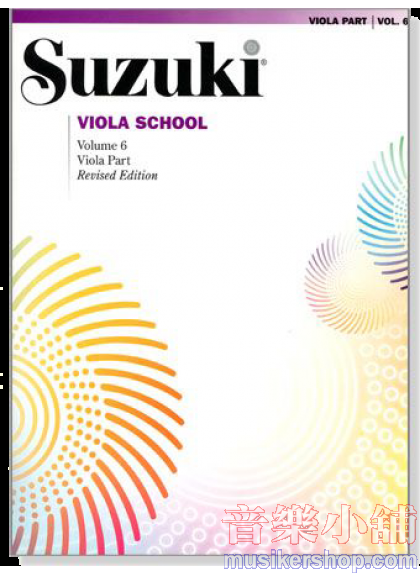
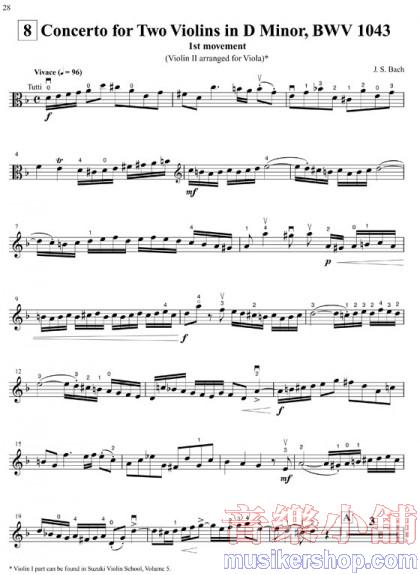
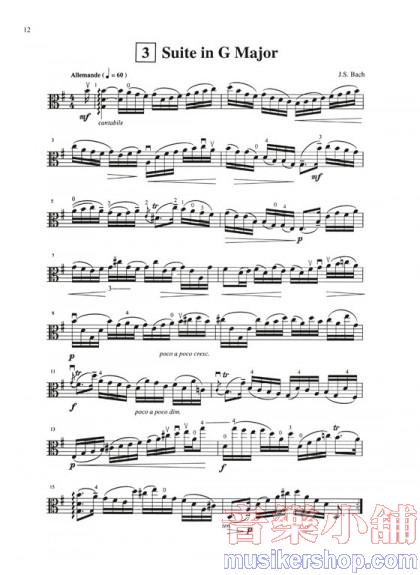
鈴木中提琴學校 中提琴譜【第六冊】革新版Suzuki Viola School Viola Part, Volume 6 (Revised) | ||||||||||||||
鈴木中提琴音樂教學,是日本鈴木鎮一先生所發展出的獨特教學法,又稱才能教育,也被稱為母語式教學法,重視音樂的聆聽、模仿、反覆練習,重視音樂感覺的培養,運用團團體教學來提高兒童學習的興趣。Viola Part. Method/Instruction; SmartMusic; String - Viola (Suzuki); Suzuki. Suzuki Viola School. Book. 32 pages. Published by Alfred Music (00-0241S). | ||||||||||||||
| Alfred Music 商品編號:00-0491S | ||||||||||||||
|
About Suzuki MethodThe Suzuki Method is based on the principle that all children possess ability and that this ability can be developed and enhanced through a nurturing environment. All children learn to speak their own language with relative ease and if the same natural learning process is applied in teaching other skills, these can be acquired as successfully. Suzuki referred to the process as the Mother Tongue Method and to the whole system of pedagogy as Talent Education. The important elements of the Suzuki approach to instrumental teaching include the following:an early start (aged 3-4 is normal in most countries); the importance of listening to music; learning to play before learning to read; -the involvement of the parent; a nurturing and positive learning environment; a high standard of teaching by trained teachers; the importance of producing a good sound in a balanced and natural way; core repertoire, used by Suzuki students across the world; social interaction with other children. Suzuki students from all over the world can communicate through the language of music. |
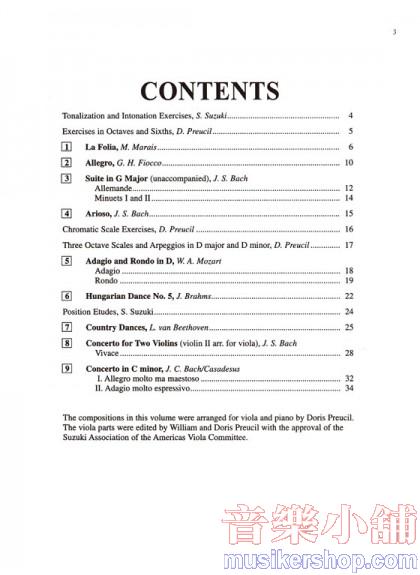
| 【目錄】 |
|


