商品分類
商品分類 
商品描述
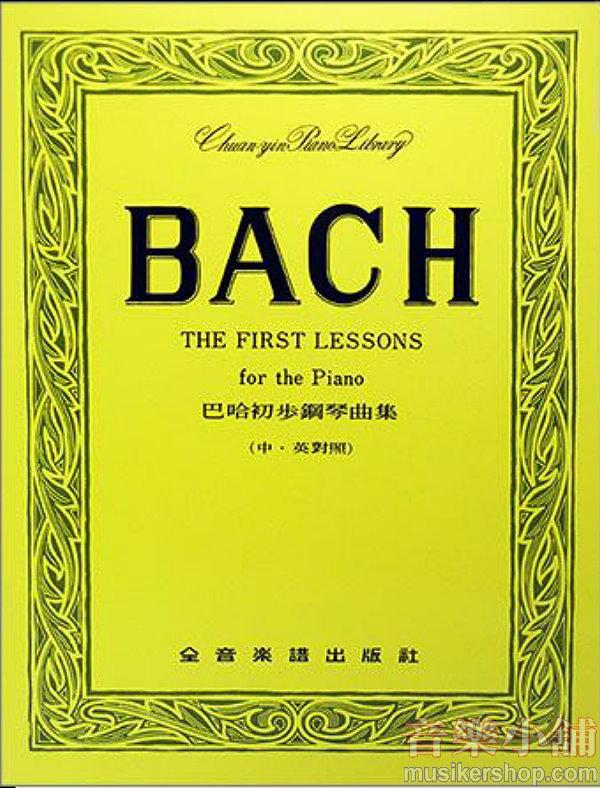
J. S. Bach : First Lessons in Bach (巴哈初步鋼琴曲集)
鋼琴 – 巴洛克時期
簡介:
被世人尊稱為'音樂之父'的約翰•塞巴斯倩•巴哈(John Sebastian Bach, 1685-1750),在其一生中創作了無數膾炙人口的優雅樂章。在他所有的作品中,除了許多長篇巨構的樂曲之外,也有為數頗豐的迷人小品曲。這些小曲有許多是他為了教導其子女、學生們而寫的,故其中所蘊含的教育價值之豐富,自不在話下。但這些小曲並不只是單純的練習曲;它們同時也都是很優秀的藝術作品。每首曲子雖然簡短,卻首首曲調優美而富節奏性。藉由彈奏這些'巧妙地取用手指練習'的小品曲,學生們不僅可按步就班地習得各種必要的手指技巧,更能培養出欣賞真正的好音樂之卓越品味。十九世紀末年,英國的著名音樂教育家――華德•卡羅爾(Walter Carroll),乃從巴哈作品中挑出很簡單又具有真正教育價值的小曲子,將之集結成冊,稱為《巴哈初步鋼琴曲集》(First Lessons in Bach)。卡羅爾深信,經由規律而有系統地學習此曲集,定能喚起學生對巴哈音樂的興趣,以及對真正有品味的音樂之渴望。而這也正是發展鋼琴彈奏技巧及感情表現,最快、最好的不二法門。
產品特色:
- 教育與藝術兼具: 這些作品不單是練習曲,更是優秀的藝術作品,首首曲調優美。
- 系統化學習路徑: 由華德•卡羅爾編選,包含上冊 16 首與下冊 12 首,旨在順利銜接巴哈小賦格曲或二聲部創意曲。
- 豐富曲式學習: 涵蓋小步舞曲、波蘭舞曲、進行曲、彌賽特舞曲、布雷舞曲、嘉禾舞曲、詼諧曲、薩拉邦德舞曲及前奏曲等基礎曲式。
- 複音音樂入門: 透過選錄較簡單優美的小品,訓練雙手獨立性,奠定詮釋巴洛克音樂風格的基礎。
作曲家介紹:
約翰•塞巴斯倩•巴哈 (John Sebastian Bach, 1685-1750) 是巴洛克時期的德國作曲家,被尊稱為'音樂之父'。華德•卡羅爾 (Walter Carroll) 是十九世紀末英國著名的音樂教育家,他體認到巴哈作品的教育價值並編選了此套教材。
收錄曲目:
(上集)
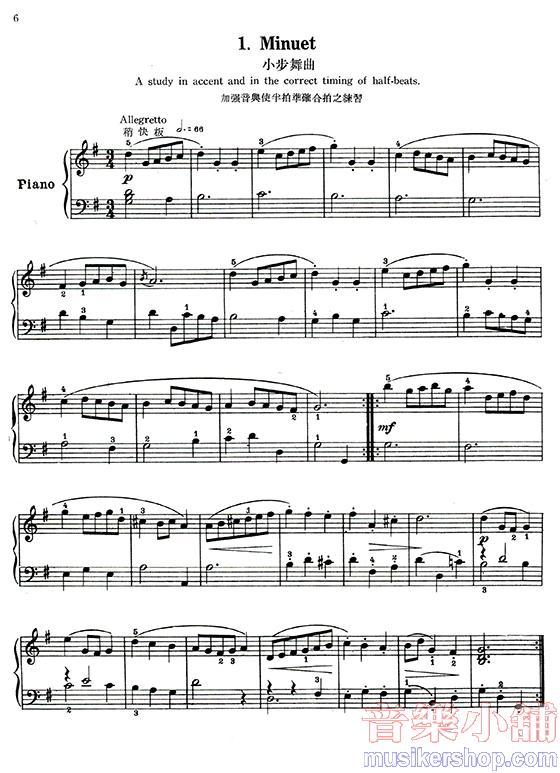
- 1. 小步舞曲:加強音與使半拍準確合拍之練習
- 2. 小步舞曲:加強音與為獲得音之適當均衡之練習
- 3. 小步舞曲:普通和弦(密集位置)琶音奏法之練習
- 4. 波羅奈斯舞曲:區分樂句與使四分之一拍準確合拍之練習
- 5. 進行曲:切分法與自頭至尾保持節拍穩定之練習
- 6. 小步舞曲:比較兩手間節奏形態之練習
- 7. 小步舞曲:細心使音均勻而使彈奏圓滑之練習
- 8. 小步舞曲:音值之練習,使下聲部較上聲部稍為顯著
- 9. 進行曲:斷奏觸鍵,反覆音與遵守休止符之練習
- 10. 小步舞曲:區分樂句,圓滑奏觸鍵與使音均勻之練習
- 11. 彌賽特曲:持續音與音色之練習
- 12. 布雷舞曲:觸鍵比較與各手獨立之練習
- 13. 彌賽特曲:分解八度與使分句整潔之練習
- 14. 小步舞曲:表情,分句與音色美之練習
- 15. 嘉禾舞曲:區分樂句,音調之漸強漸弱與彈奏似唱之練習
- 16. 進行曲:使三連符準確合拍與使節奏穩定之練習
(下集)
- 1. 波羅奈斯舞曲:節奏正確與分句整潔之練習
- 2. 嘉禾舞曲:伴奏觸鍵之練習
- 3. 波羅奈斯舞曲:音調對比與旋律鮮明之練習
- 4. 嘉禾舞曲:圓滑奏觸鍵與各手獨立之練習
- 5. 小步舞曲:分句與使音均勻之練習
- 6. 波羅奈斯舞曲:斷奏與基本聲部彈奏之練習
- 7. 嘉禾舞曲:觸鍵比較與輪廓鮮明之練習
- 8. 小步舞曲:觸鍵均等與音色優美之練習
- 9. 詼諧曲:觸鍵比較與各手獨立之練習
- 10. 薩拉邦德舞曲:表情與聲部均衡之練習
- 11. 小步舞曲:分句與音色之練習
- 12. 前奏曲:聲部彈奏與使用逆漣音之練習
書籍詳細資料:
- 作曲家 : 巴哈 (巴赫)
- 出版社 : 全音樂譜出版社 (Chuan Yin Music Publishing Co.)
- 原文書名 : Bach The First Lessons for the Piano
- 適用樂器 : 鋼琴
- 適用對象 : 進階
- 記譜法 : 五線譜(一般)
- 商品編號 : P236
- 外型尺寸 : 22.6 X 30.4 公分
- 總書頁 : 35
Description:
Johann Sebastian Bach (1685-1750), revered as the 'Father of Music', composed countless elegant works throughout his life. In addition to his grand masterpieces, he wrote many charming small pieces specifically for teaching his children and students. These pieces are not merely exercises but excellent works of art, each being melodious and rhythmic. By practicing these 'cleverly selected finger exercises', students can methodically acquire essential techniques while developing an outstanding taste for high-quality music. In the late 19th century, British music educator Walter Carroll compiled these pieces into First Lessons in Bach. This collection consists of simple yet educationally valuable pieces, most of which are selected from the Notenbüchlein für Anna Magdalena Bach. Carroll believed that systematic study of these pieces would awaken a student's interest in Bach's music and desire for tasteful compositions, serving as the fastest and best way to develop piano technique and emotional expression.
Features:
- Educational and Artistic Integration: These pieces are not just exercises but excellent artistic works with beautiful melodies.
- Systematic Progression: Carroll compiled 16 simple pieces for Book I and 12 more advanced pieces for Book II to transition students toward Bach's Little Fugues or Two-Part Inventions.
- Comprehensive Musical Forms: Covers essential forms like Minuet, Polonaise, March, Musette, Bourrée, Gavotte, Scherzo, Sarabande, and Prelude.
- Polyphonic Foundation: Designed to train the independence of hands through Bach's polyphonic textures.
About Composer:
Johann Sebastian Bach (1685-1750) was a German composer and musician of the Baroque period, widely regarded as the 'Father of Music'. Walter Carroll was a prominent British music educator in the late 19th century who recognized the educational potential of Bach's simpler works for students.
Contents:
Book I
- 1. Minuet: A study in accent and in the correct timing of half-beats
- 2. Minuet: A study in accent and in obtaining a proper balance of tone
- 3. Minuet: A study in the arpeggio of the common chord (close position)
- 4. Polonaise: A study in phrasing and in the correct timing of quarter-beats
- 5. March: A study in syncopation and in keeping a steady beat throughout
- 6. Minuet: A study in contrasting rhythmic patterns between the hands
- 7. Minuet: A study in legato playing, with careful balance of tone
- 8. Minuet: A study in tone-values, the lower part to be slightly more prominent than the the upper
- 9. March: A study in staccato touch, repeated notes, and observance of rests
- 10. Minuet: A study in phrasing, legato touch, and balance of tone
- 11. Musette: A study in sustained notes and quality of tone
- 12. Bourrée: A study in contrasts of touch and independence of each hand
- 13. Musette: A study in broken octaves and in neat phrasing
- 14. Minuet: A study in expression, phrasing, and beauty of tone
- 15. Gavotte: A study in phrasing, gradation of tone, and cantabile playing
- 16. March: A study in the accurate timing of triplets and in steadiness of rhythm
Book II
- 1. Polonaise: A study in accuracy of rhythm and in neatness of phrasing
- 2. Gavotte: A study in accompaniment touch
- 3. Polonaise: A study in contrasts of tone and in clearness of melody
- 4. Gavotte: A study in legato touch and independence of each hand
- 5. Minuet: A study in phrasing and in balance of tone
- 6. Polonaise: A study in staccato and in elementary part-playing
- 7. Gavotte: A study in contrasts of touch and in clearness of outline
- 8. Minuet: A study in evenness of touch and in beauty of tone
- 9. Scherzo: A study in contrasts of touch and independence of each hand
- 10. Sarabande: A study in expression and in balance of parts
- 11. Minuet: A study in phrasing and in quality of tone
- 12. Prelude: A study in Part-playing and in the use of the inverted mordent
Product Details:
- Composer : Bach J. S.
- Publisher : Chuan Yin Music Publishing Co.
- Original Title : Bach The First Lessons for the Piano
- Instrumentation : Piano
- Target Audience : Intermediate / Children
- Notation : Staff Notation
- Item Number : P236
- Format : 22.6 X 30.4 CM
- Pages : 35
★ 價格與供貨情形如有變動,恕不另行通知 ★